
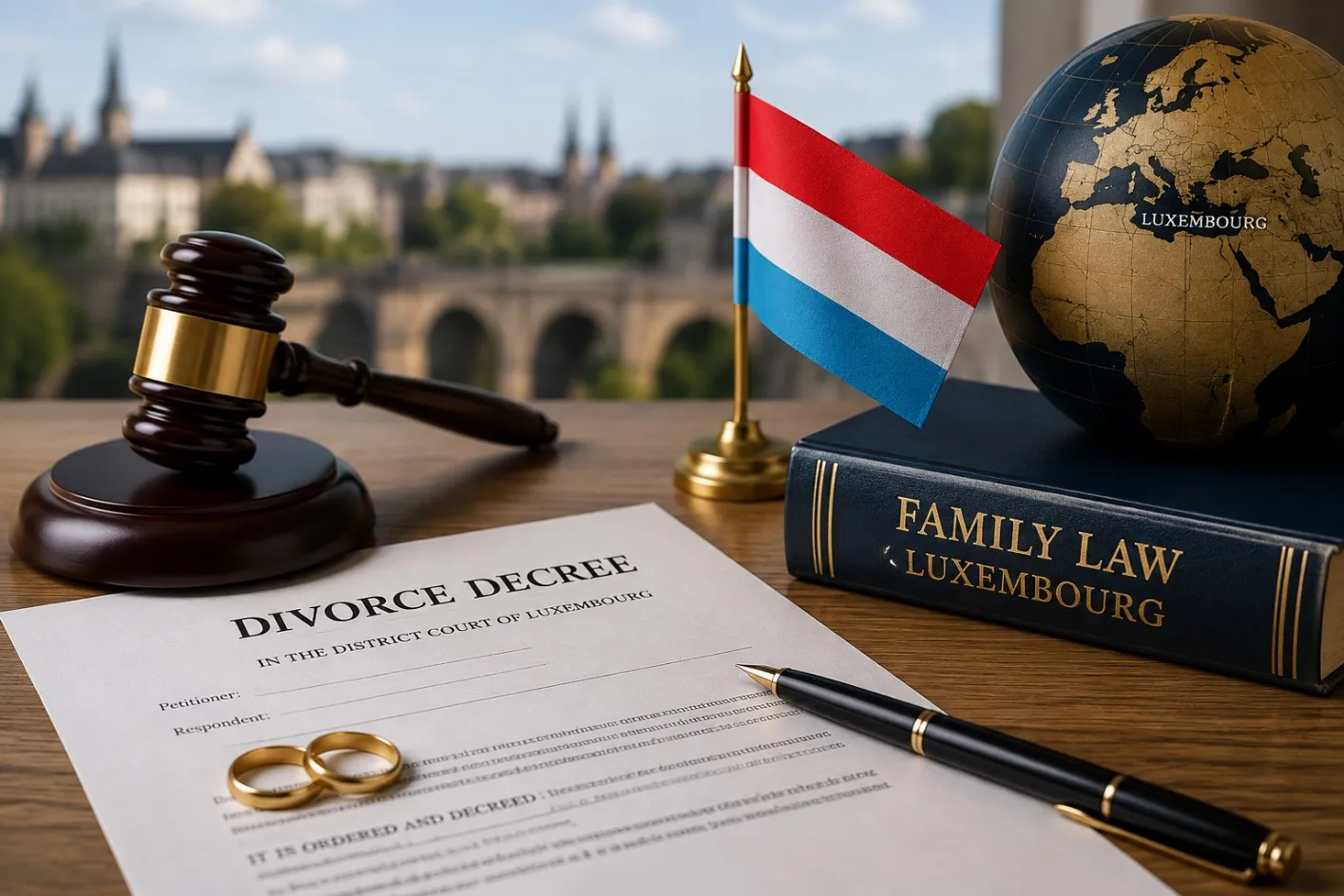
International marriages can make divorce more complex than a domestic case. One spouse may live in Luxembourg while the other has moved abroad; the couple may have different nationalities, children may live elsewhere and assets may be spread across several countries. These factors can affect where proceedings should begin and which law applies.
For couples seeking an international divorce lawyer Luxembourg, the first step is usually to separate the legal questions. Jurisdiction, applicable divorce law, parental responsibility, maintenance and matrimonial property do not necessarily follow the same rules.
Check Which Country Has Jurisdiction
Before dealing with the consequences of divorce, the spouses need to determine which courts may hear the case. Under current EU rules, jurisdiction in matrimonial matters can depend on habitual residence, the spouses’ last habitual residence where one still lives there, the respondent’s habitual residence, or the applicant’s residence for a specified period. Common nationality can also be relevant.
A cross-border couple should review:
- Where each spouse currently lives and where they last lived together;
- How long the applicant has lived in the current country;
- Whether the spouses share a nationality; and
- Whether proceedings have already started elsewhere.
More than one country may potentially have jurisdiction, so starting proceedings without checking the position can create unnecessary complexity.
Determine Which Law Applies
The court hearing the case and the law governing the divorce are separate questions. Luxembourg participates in the EU’s Rome III framework on the law applicable to divorce and legal separation.
Within that framework, spouses may agree on the applicable divorce law where there is a recognised connection, including the law of their habitual residence, their last habitual residence where one spouse still lives, the nationality of either spouse, or the law of the forum.
If no valid choice has been made, the applicable law is determined through connecting factors, beginning with habitual residence and moving through other factors such as the last habitual residence, common nationality and the law of the court hearing the case.
Understand Luxembourg Divorce Routes
Luxembourg recognises two main forms of divorce: divorce by mutual consent and divorce based on the irretrievable breakdown of the marriage.
Mutual-consent divorce requires the spouses to agree on the end of the marriage and its consequences. The agreement can address residence, parental authority, arrangements for children and maintenance between spouses. Where common property must be divided, notarial steps may also be necessary.
For international couples, an agreement can simplify the process, but cross-border issues still need separate attention.
Treat Children, Maintenance and Property Separately
During a cross-border divorce Luxembourg case, couples should remember that the law governing the divorce itself does not automatically decide every related issue. EU rules on applicable divorce law expressly exclude parental responsibility, maintenance obligations and matrimonial property consequences.
Couples may therefore need separate analysis of:
- Where the children are habitually resident and which court can decide parental matters;
- Which rules govern maintenance and matrimonial property; and
- How assets located in another country may be dealt with.
This is particularly relevant where the spouses have moved between countries during the marriage.
Prepare Foreign Documents Early
International cases often require documents issued abroad. Marriage certificates, birth certificates, proof of nationality and documents concerning children or property may need to be produced during proceedings.
For a Luxembourg mutual-consent divorce, official guidance states that documents issued by foreign public authorities must meet applicable certification requirements and be translated into one of Luxembourg’s official languages by a sworn translator.
Preparing these documents early can reduce delays, especially where records must be obtained from several countries.
Consider Recognition of the Final Divorce
A divorce obtained in one country may also need to be recognised or recorded elsewhere. Within the EU, matrimonial judgments are governed by European recognition rules, while divorces from non-EU countries may involve different procedures.
If a marriage is recorded in Luxembourg’s civil registers and the divorce is obtained abroad, further steps may be needed to update those records. Couples with continuing links to several countries should therefore consider recognition before assuming that one judgment resolves every administrative issue internationally.
Conclusion
International divorce involves more than ending a marriage. The spouses may need to determine jurisdiction, applicable law, arrangements for children, maintenance, property issues and recognition of the final judgment across borders.
For couples connected to Luxembourg and another country, early review of residence, nationality, family arrangements and foreign documents can help identify which issues belong in Luxembourg proceedings and which may require separate treatment elsewhere.